
Pre-Pointe Assessment
Your journey to en pointe starts here.
Perform
✦
Recover
✦
Strengthen
✦
Empower
✦
Perform ✦ Recover ✦ Strengthen ✦ Empower ✦
Tailored pre-pointe physiotherapy assessments
Preparing to go en pointe is an exciting milestone, and we’re here to ensure you step into it with confidence, strength, and safety.
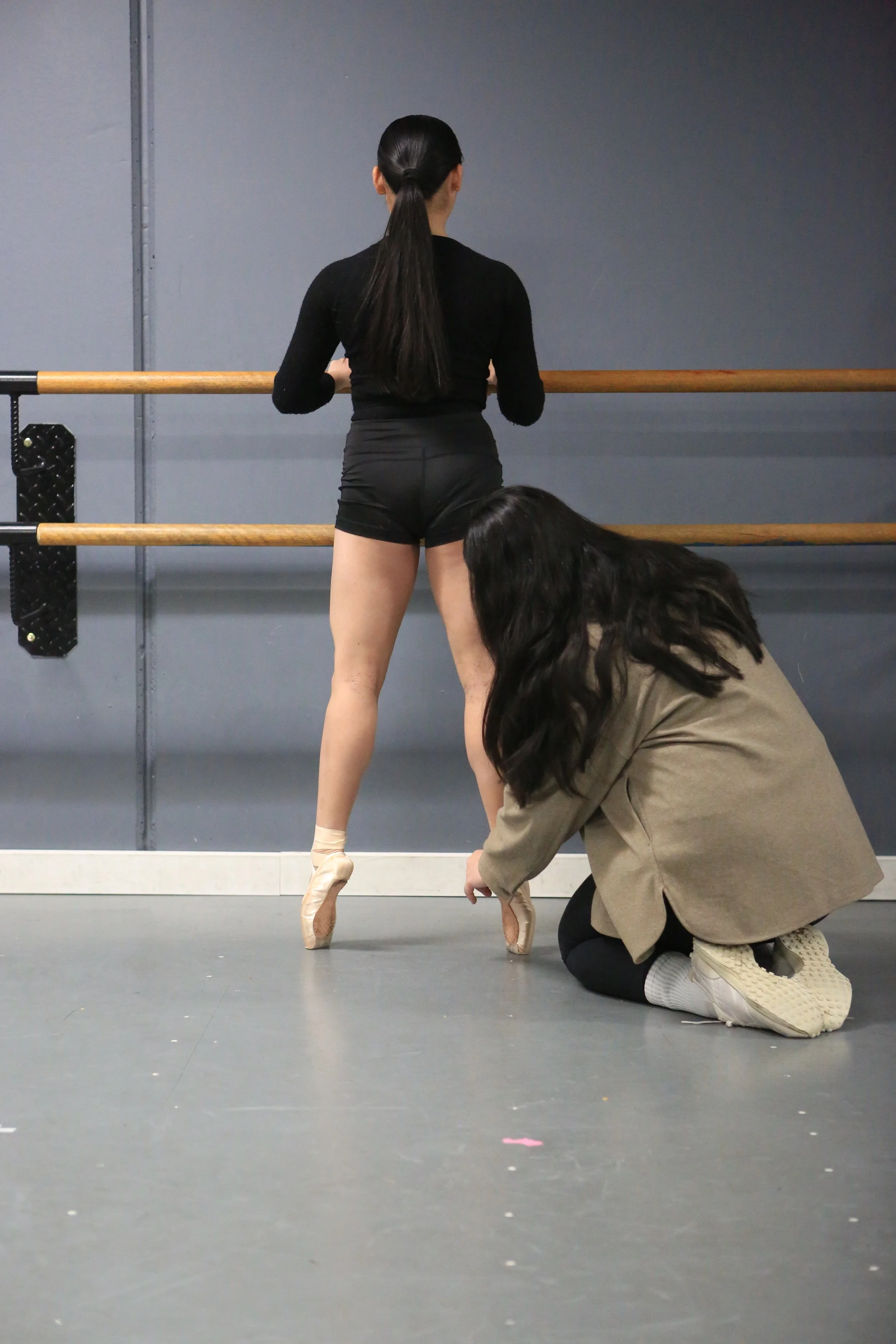
Our Pre-Pointe Assessments look closely at your technique, mobility, strength and foundational dance skills to ensure your body is truly ready for the demands of pointe work. By identifying any areas that need support and providing a clear, personalised plan, we help dancers feel empowered, prepared and set up for a long, healthy pointe journey.
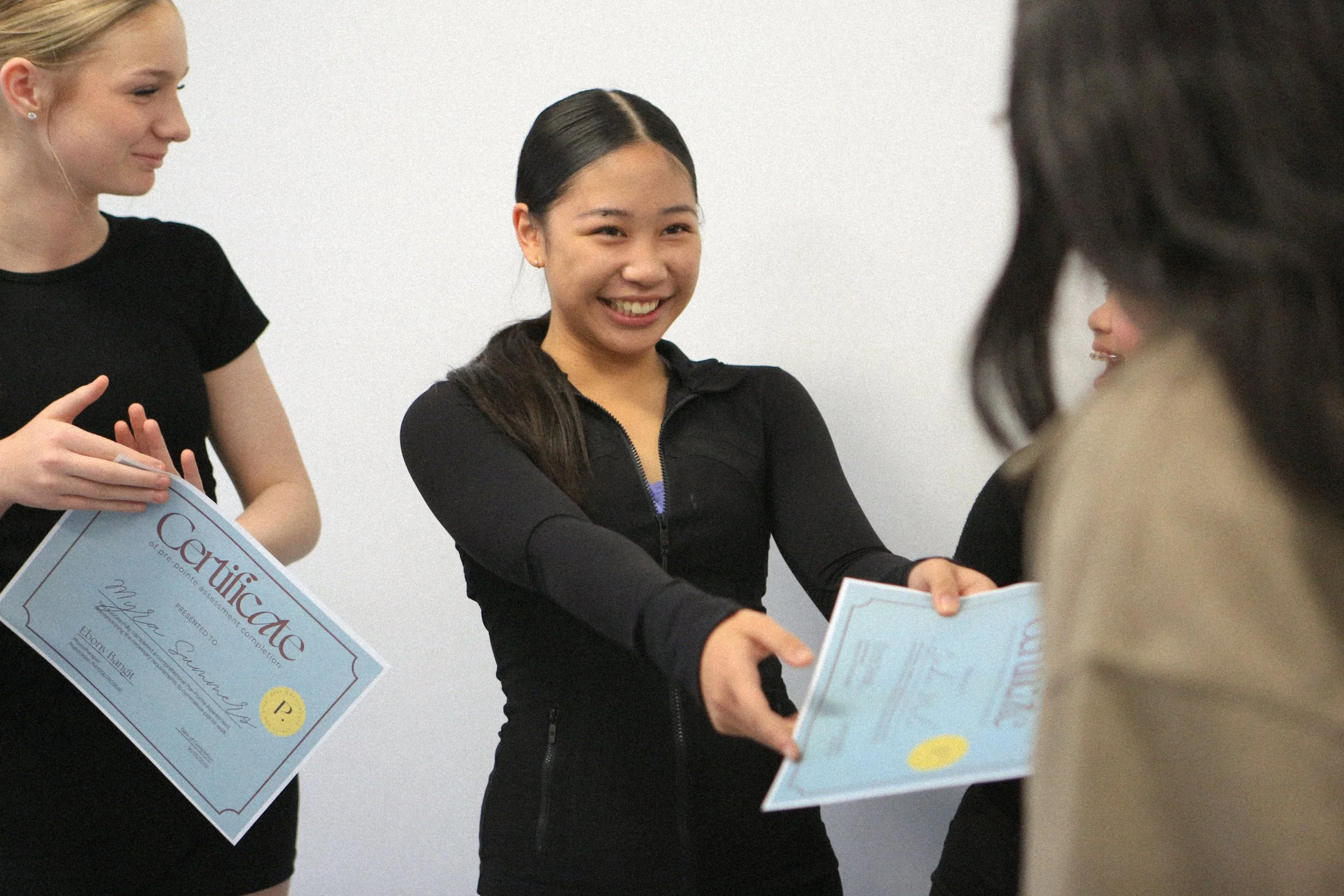
There is currently no universal pre-pointe assessment standard for physiotherapists, which is why dancers should be assessed by clinicians trained in dance medicine. Our pre-pointe assessment framework is built from years of experience and ongoing education, drawing on guidance from leaders in the field and through recommendations from the International Association of Dance Medicine and Science (IADMS).
We continually review and update our process to ensure alignment with emerging research and best practices. Each dancer is assessed holistically, considering strength, mobility, control, growth stage and technical readiness to ensure safe progression to pointe work, reduce injury risk and support long-term performance and wellbeing.
Our bespoke assessment
FAQs
-
Minimum of 3 years of ballet training
Currently enrolled in at least 2 ballet classes per week
(may include a dedicated ballet technique class)
Syllabus Level: Students should be in the final year of training before beginning vocational-level examinations (e.g. Intermediate Foundation or equivalent).
Examples include:
RAD: Grade 5
BBO: Grade 5
Cecchetti: Grade 5
-
Dance places very unique demands on the body, and not all physiotherapists are trained to assess these safely. A dance-specific physio has completed further CPD and training in dance medicine, biomechanics and injury prevention for artistic athletes. This ensures your dancer is assessed by someone who understands turnout, pointe-load, growth-related changes and the technical requirements of ballet. With this knowledge, we can provide accurate guidance, appropriate conditioning, and a clear plan that supports both safety and long-term performance.
-
It is actually very common not to pass a pre-pointe assessment on your initial assessment. This does not reflect your talent, ability or future potential as a dancer. Every dancer develops strength, control and mobility at different rates, and some simply need more time or targeted conditioning to safely meet the demands of pointe work. Your physiotherapist will explain your results clearly and provide an individualised program to help you build the required foundations before your review. Progressing to pointe is a personal journey, not a race, and safety always comes first.
-
The initial assessment appointment is 60 minutes.
Any subsequent appointments are dependant on the individual dancers review but typically are between 20-45 minutes.
-
Please ensure you have completed your Pre-pointe Assessment Questionnaire prior to your appointment (this is generally emailed one week in advance
Tight fitting clothes (e.g. leotard, singlet and shorts)
A drink bottle
-
Yes. All dancers are encouraged to bring a parent, guardian or teacher to their assessment. Having a support person present helps everyone understand the process, the results and the steps needed for safe progression to pointe.
After your assessment, you will receive a detailed report that includes your main findings, areas requiring development and your individualised conditioning plan. With your consent, this report can also be shared directly with your dance teachers.
We welcome communication and collaboration, so teachers are encouraged to contact us before or after the assessment if they have any questions or would like further clarification.
-
Yes. You can still book your pre-pointe assessment even if you are currently managing an injury. One week before your appointment, you will receive a Pre-Pointe Questionnaire where you can provide details about your injury.
Depending on the type and severity of the injury, we may contact you for more information or recommend booking a standard physiotherapy session first to ensure your safety.
In many cases, dancers can still complete their pre-pointe assessment while injured. Some tests may simply be modified or postponed and re-tested later once the injury has settled. Our goal is to keep you safe while still supporting your progression toward pointe work.
-
Yes. We are more than happy to travel to your dance school to complete pre-pointe assessments. A minimum of 3 dancers is required for mobile bookings, and we will need a small space, preferably a studio room, to set up our portable physiotherapy bed.
If your dance school is interested, please email hello@plietheclinic.com.au with the subject line “Mobile Pre-Pointe Assessment.”